
计算机与信息学院王勇团队开展的安徽省研究生质量工程项目“‘四链’联动的地方性高校计算机技术专业研究生培养体系研究”顺利完成结题。该项目立足地方高校研究生培养实际,针对计算机技术专业人才培养中的痛点,构建了“人才能力链—学科专业链—教学资源链—质量监控链”四链联动、协同推进的培养体系,取得了一系列扎实成果。
本项目自2023年启动以来,围绕计算机技术专业研究生培养体系展开系统改革。在“人才能力链”方面,项目组依据企业与社会需求,重新设计人才分类培养体系,明确研究生能力结构与成长路径;“学科专业链”强化产业需求导向,与奇瑞汽车、盟博科技、共生物流等30余家企业开展深度合作,共建产业研究院,推动产学研协同育人;“教学资源链”整合课程资源、科研平台与基层教学组织,建设了一批高水平实验室与实践平台;“质量监控链”则引入工程教育认证理念,建立全过程评价与持续改进机制,严把培养质量关。
经过两年多的实践,“四链”联动研究生培养模式成效显著。据统计,计算机技术专业研究生于CCF-A类期刊《IEEE Transactions on Multimedia》等中科院二区以上的高水平期刊发表论文30余篇。计算机技术专业硕士毕业生学位申请通过率、就业率均实现100%;8名毕业生考取国防科技大学、南京航空航天大学等高校博士研究生;多数毕业生进入企业后迅速成长为技术骨干。此外,项目组与多家企业共建课程、联合攻关,获批芜湖市“揭榜挂帅”项目1项,真正实现了科学研究与技术应用“两条腿走路”。
计算机与信息学院始终高度重视研究生培养质量,后续将持续深入推进“四链”融合,以系统化、精细化方式整合校内外优质资源,为研究生教育提供坚实保障。与此同时,着力加强青年导师队伍建设,提升其教学与科研能力,为研究生培养增添活力,为安徽省计算机类研究生教育的高质量发展贡献智慧与力量,推动区域教育水平提升,培育优秀的高层次专业人才。
主要成果列表:
(1)计算机技术研究生发表高水平论文列表
[1] Bing Cai, Gui-Fu Lu, Liang Yao, and Jiashan Wan. Aligned multi-view clustering for unmapped data via weighted tensor nuclear norm and adaptive graph learning.Neurocomputing, 597:128016, 2024. (SCI/EI,中科院二区)
[2] Bing Cai, Gui-Fu Lu, Guangyan Ji, and Weihong Song. Complete multi-view subspace clustering via auto-weighted combination of visible and latent views.Information Sciences, 665:120381, 2024. (SCI/EI,中科院一区)
[3] Bing Cai, Gui-Fu Lu, Jiashan Wan, and Yangfan Du. Auto-weighted multi-view clustering with the use of an augmented view. Signal Processing, 215:109286, 2024. (SCI/EI,中科院二区)
[4] Bing Cai, Gui-Fu Lu, Hua Li, and Weihong Song. Tensorized scaled simplex representation for multi-view clustering. IEEE Transactions on Multimedia, 26:6621–6631, 2024. (SCI/EI,中科院一区)
[5] Bing Cai, Gui-Fu Lu, Xiaoxing Guo, and Tong Wu. Tensorized latent represen-tation with automatic dimensionality selection for multi-view clustering. Pattern Recognition, 160:111192, 2025. (SCI/EI,中科院一区)
[6] Yaozu Kan, Gui-Fu Lu, Liang Yao, Bing Cai, and JinBiao Zhao. Multi-view clustering using a flexible and optimal multi-graph fusion method. Engineering Applications of Artificial Intelligence, 128:107452, 2024. (SCI/EI,中科院一区)
[7] Yaozu Kan, Gui-Fu Lu, and Yangfan Du. An adaptive kernel dictionary-based low-rank representation method for subspace clustering. Neural Networks,178:106434, 2024. (SCI/EI,中科院一区)
[8] XiaoXing Guo and Gui-Fu Lu. Tensor-based global block-diagonal structure ra-diation for incomplete multiview clustering. Expert Systems with Applications,255:124788, 2024. (SCI/EI,中科院一区)
[9] Xiaoxing Guo, Ming Yang, and Gui-Fu Lu. Tensor-based late fusion incomplete multiview clustering. IEEE Transactions on Multimedia, 2025. (SCI/EI,中科院一区)
[10] Xiaoxing Guo and Gui-Fu Lu. Comprehensive consensus representation learning for incomplete multiview subspace clustering. Information Sciences, 678:120935, 2024. (SCI/EI,中科院一区)
[11] Xiaoxing Guo and Gui-Fu Lu. Tensor-based incomplete multiple kernel clustering with auto-weighted late fusion alignment. Pattern Recognition, 164:111601, 2025.(SCI/EI,中科院一区)
[12]Xiaoxing Guo, Gui-Fu Lu, Yangfan Du, and Yaozu Kan. Generative views recovery and error-guided topological tensor network for incomplete multi-view clustering. Pattern Recognition, page 112750, 2025
[13]Xiaoxing Guo and Gui-Fu Lu. Contrastive-driven diversity and consistency exploration in tensorized multiview subspace clustering. IEEE Transactions on Neural Networks and Learning Systems, 2025.
[14] Tong Wu and Gui-Fu Lu. Coupled double self-expressive subspace clustering with low-rank tensor learning. Expert Systems with Applications, 255:124619,2024. (SCI/EI,中科院一区)
[15] Tong Wu and Gui-Fu Lu. Specific and coupled double consistency multiview subspace clustering with low-rank tensor learning. Signal Processing,229:109803, 2025. (SCI/EI,中科院二区)
[15] Tong Wu and Gui-Fu Lu. Coupled double consensus multi-graph fusion for multi-
view clustering. Information Sciences, 680:121186, 2024. (SCI/EI,中科院一区)
[17] Tong Wu and Gui-Fu Lu. Tensorized diversity and consistency with laplacian manifold for multi-view clustering. Information Sciences, 690:121575, 2025. (SCI/EI,中科院一区)
[18] Shouhang Wang, Yong Wang, Guifu Lu, and Wenge Le. Mixed structure low-rank representation for multi-view subspace clustering. Applied Intelligence,53(15):18470–18487, 2023. (SCI/EI,中科院二区)
[19] Yong Wang, Linjun Chen, Cuiyun Gao, Yingtao Fang, and Yong Li. Prompt enhance api recommendation: visualize the user’s real intention behind this query. Automated Software Engineering, 31(1):27, 2024. (SCI/EI,中科院二区)
[20] Yifan Zhang, Yong Wang, Guifu Lu, Cuiyun Gao, Lin Cui, and Zizhuang Ma.Kandmvc: Kan be used for deep multi-view clustering? Expert Systems with Applications, 273:126868, 2025. (SCI/EI,中科院一区)
[21] Yong Wang, Huadong Zhou, Gui-Fu Lu, Cuiyun Gao, and Shuai Meng. Improving user-oriented fairness in recommendation via data augmentation: Don’t worryabout inactive users. Journal of Systems and Software, 225:112387, 2025. (SCI/EI,中科院二区)
[22] Tong Wu, Gui-Fu Lu, and Bing Hu. Auto-weighted exponential tensor nuclear norm minimization for multi-attribute low-dimensional subspace clustering. Neurocomputing, 640:130394, 2025. (SCI/EI,中科院二区)
[23] Tong Wu and Gui-Fu Lu. Tensor idempotent representation with auto-weighted exponential tensor nuclear norm minimization for multi-view clustering. Applied Soft Computing, 175:113103, 2025. (SCI/EI,中科院二区)
[24] Shanshan Wu and Gui-Fu Lu. Consensus incomplete multi-view clustering with nonconvex tensor smooth graph learning. Pattern Recognition, 167:111764, 2025. (SCI/EI,中科院一区)
[25] Shanshan Wu and Gui-Fu Lu. Projective multi-view clustering with tensor low-rank representation. Signal Processing, page 110326, 2025. (SCI/EI,中科院二区)
[26] Shanshan Wu and Gui-Fu Lu. Incomplete multi-view clustering with cross-graph diversity and improved nonconvex tensor regularizer. Expert Systems with Applications, 297:129535, 2026. (SCI/EI,中科院一区)
[27] Tong Wu and Gui-Fu Lu. A double auto-weighted strategy for multi-view clustering. Engineering Applications of Artificial Intelligence, 164:113148, 2026. (SCI/EI,中科院一区)
[28] Yuanzhuo Zhang and Gui-Fu Lu. Tensorized multi-dimensional multi-view clustering based on nonnegative matrix factorization. Neural Networks, page 108507,2025. (SCI/EI,中科院二区)
[29] Jun Li, Guojun Li, Haojie Du, Kai Xu, and Baozhu Chen. Cross-layer structure information fusion for deep multi-view clustering. Expert Systems with Applications, page 130448, 2025. (SCI/EI,中科院一区)
[30] Lihao Yang, Yong Wang, Yourui Huang, Guifu Lu, and Yazhou Ren. Latent representation-based multi-view subspace clustering: Collaborative optimization of resistance constraint and laplacian regularization. Expert Systems with Applications, page 130754, 2025. (SCI/EI,中科院一区)
(2)计算机技术毕业生考取博士研究生名单
序号 | 姓名 | 考取学校 | 考取专业 |
1 | 郭啸行 | 国防科技大学 | 计算机科学与技术 |
2 | 吴童 | 南京理工大学 | 电子信息 |
3 | 张一凡 | 南京航空航天大学 | 计算机科学与技术 |
4 | 李傲 | 南京航空航天大学 | 软件工程 |
5 | 阚耀祖 | 江南大学 | 控制科学与工程 |
6 | 吴凡 | 中国科学技术大学 | 能源动力 |
7 | 陈林俊 | 上海大学 | 计算机科学与技术 |
8 | 蔡兵 | 南京理工大学 | 计算机科学与技术 |
(3)计算机技术研究生四题情况
序号 | 年级 | 学生总人数 | 四题人数 | 四题率 |
1 | 2022级 | 18 | 8 | 44.4% |
2 | 2023级 | 22 | 15 | 68.2% |
3 | 2024级 | 26 | 17 | 65.4% |
(4)计算机技术专业硕士研究生培养方案制定
序号 | 培养方案名称 | 制定时间 |
1 | 2023级计算机技术(085404)全日制专业硕士培养方案 | 2023年6月 |
2 | 2024级计算机技术(085404)全日制专业硕士培养方案 | 2024年6月 |
3 | 2025级计算机技术(085404)全日制专业硕士培养方案 | 2025年6月 |
(5)计算机技术专业硕士研究生课程共建和项目实习
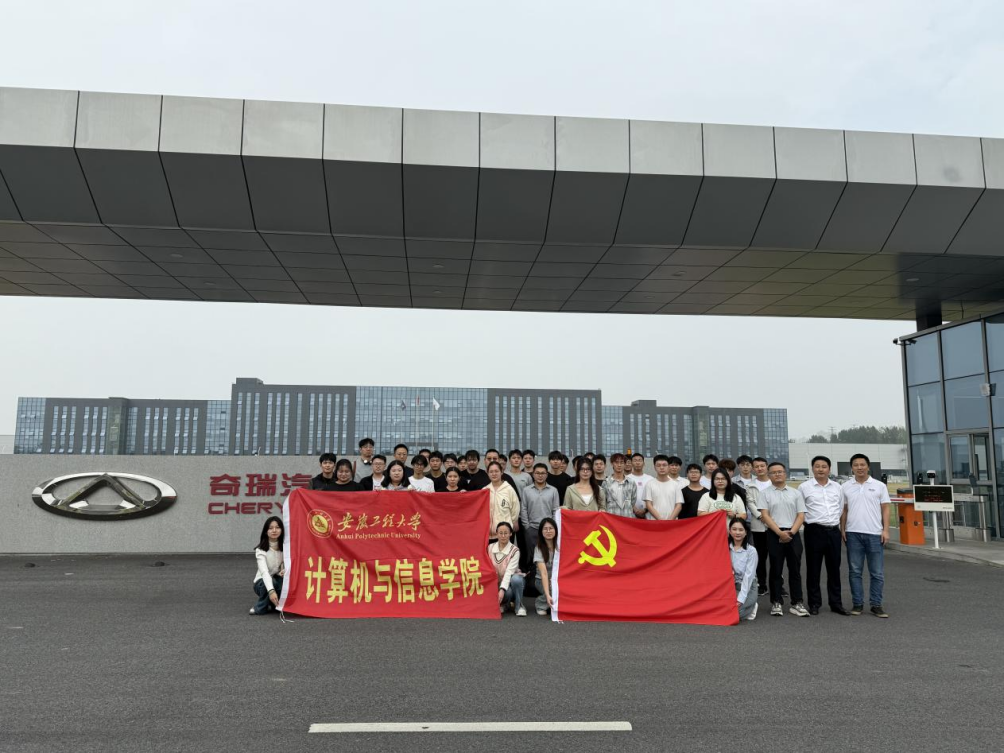
计算机与信息学院与奇瑞智能科技有限公司合作,共同开展计算机技术专业研究生《工业互联网概论》校企课程共建
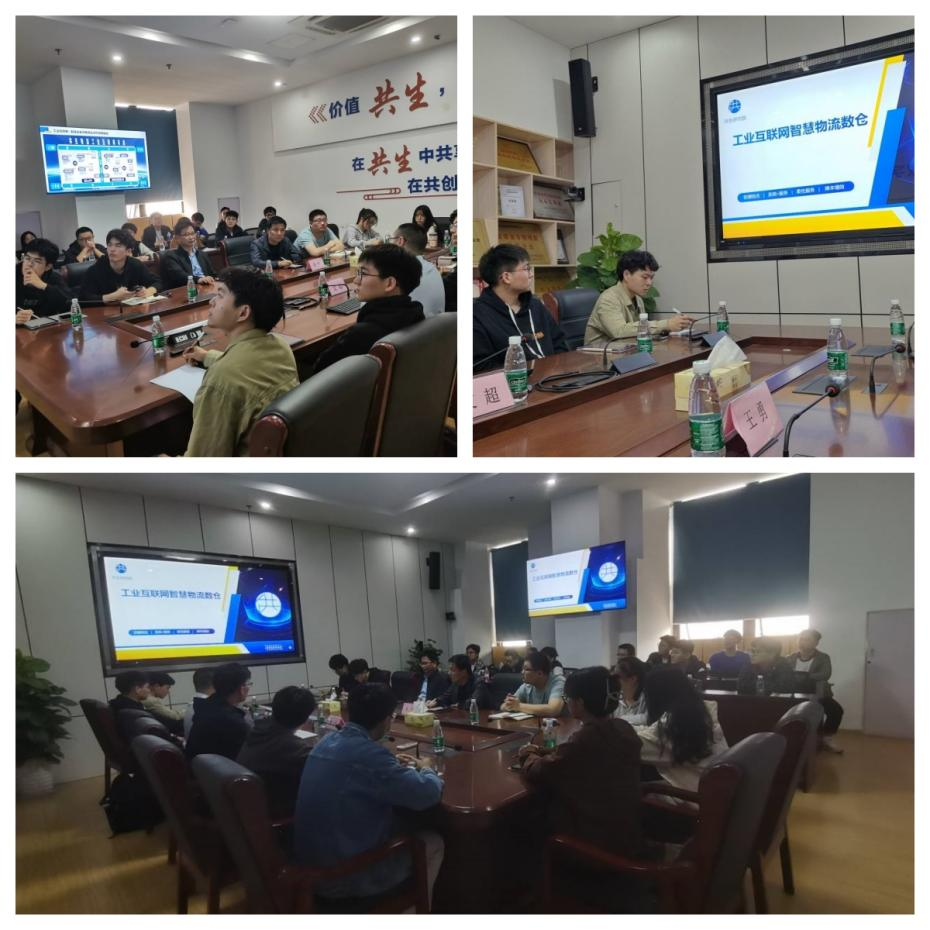
计算机与信息学院与安徽共生物流科技有限公司合作,共同开展计算机技术专业研究生《工业互联网概论》校企课程共建
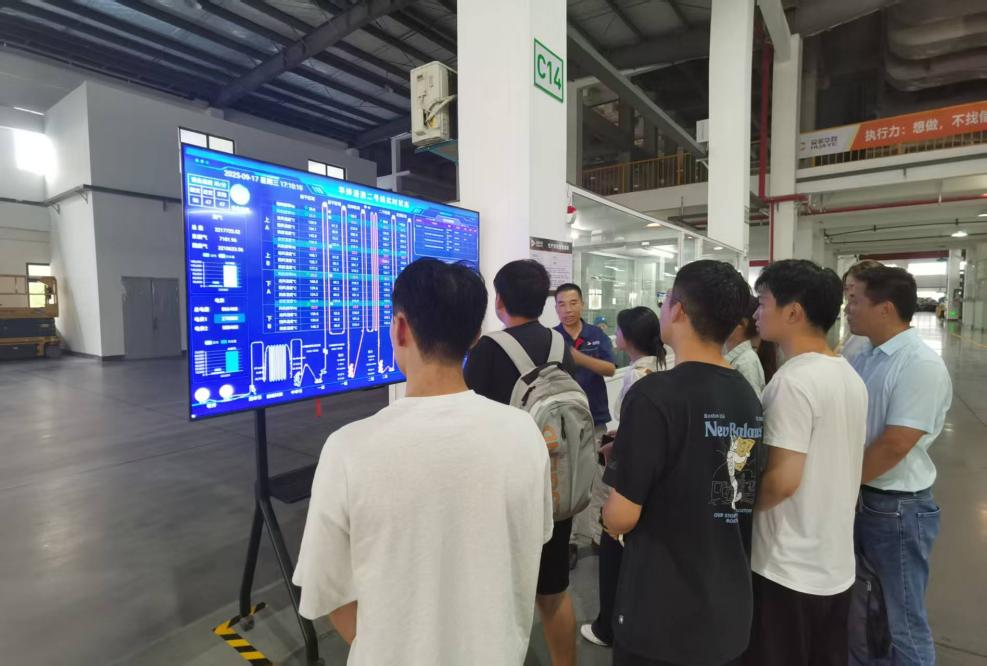
计算机技术专业研究生参与“特种材料行业数智工厂关键技术研发及应用”项目,并于安徽华烨特种材料有限公司开展项目实训
(文/图:皇苏斌;编辑:周芳婷;预审:严楠;审核:李烨)